




Appointments
Request Appointment/Request Exam - After completing the respective forms, these requests will be processed by our services, and you will receive confirmation by email. The indications about the Agreements (Insurance/Subsystem) are merely informative, please request confirmation in the "Observations" field.
Schedule Appointment/Exam myHPA - By accessing myHPA Saúde you can make the appointment in real time, directly on the Doctor's schedule according to his availability.
You can also contact us at +351 282 420 400 Algarve | +351 269 630 370 Alentejo | +351 291 003 300 Madeira
Phone booking/service hours:
Monday to Friday: 8:00 AM to 7:00 PM, Saturday: 8:00 AM to 5:00 PM Sunday and Holidays: Closed
(National landline)
Your request has been successfully received. We will confirm your appointment shortly.
Download myHPA Saúde:


Warts
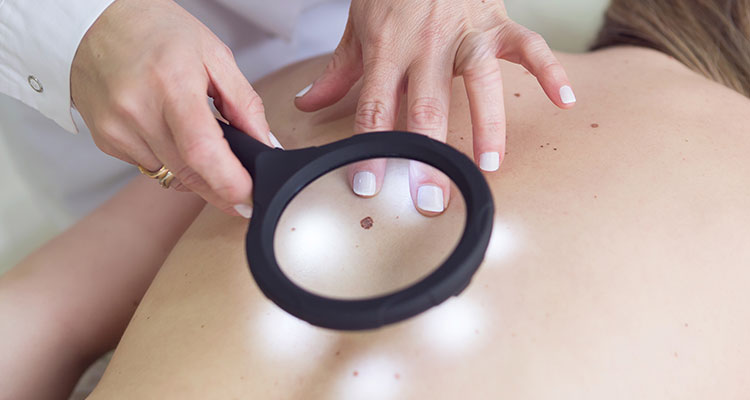
Warts are benign skin growths caused by the Human Papillomavirus (HPV). The infection occurs in the outer layers of the skin or mucosa, triggering abnormal cell growth. While generally not serious, warts can be uncomfortable, particularly on sensitive areas such as the soles of the feet, potentially causing pain and affecting walking.
Warts often appear in people who use humid environments, such as swimming pools or changing rooms. They usually start as small calluses that grow slowly and may have dark spots in the centre. In some cases, the surface may resemble a cauliflower. Warts can appear anywhere on the body but are most common on the hands and feet.
Diagnosis is made by observing the skin and lesion characteristics. Treatment usually involves keratolytic substances, which help break down the keratin in the warts. These should be applied daily until the wart disappears, which may take several weeks. If this method is ineffective, more invasive approaches such as surgical removal under local anaesthesia may be required.
Although there is no guaranteed way to prevent warts, some measures can reduce the risk of transmission, such as wearing flip-flops or sandals in public areas, pools, and changing rooms, avoiding contact with others’ warts, not scratching your own, and keeping personal towels and clothing separate.
- Dr. André Laureano
- Dr. Duarte Flor
- Dra. Virginia Coelho de Sousa
- Dr. João Guilherme do Patrocínio
- Dra. Bárbara Roque Ferreira
- Dra. Cristina da Silva Sousa
- Dr. De Lorenzo
- Dr. João Guilherme do Patrocínio
- Dr. Vitor Neto
- Dra. Christine Schoutens
- Dr. Bruno Duarte
- Dr. João Guilherme do Patrocínio
- Dr. Pedro Vale Fernandes
CUF Alvor Hospital
Hospital São Camilo - Portimão
CUF Chinicato - Lagos Clinic
CUF Guia - AlgarveShopping Clinic
CUF Montenegro - Faro Clinic
CUF S. Brás de Alportel Clinic
CUF Sines Hospital
Beja Private Clinic
CUF Funchal Clinic
| Find all the information regarding Specialities and Consultations at CUF Healthcare Units in Greater Lisbon, the North, Centre, and the Azores here. |